

Manga is Japanese comics that have become an international cultural phenomenon, winning millions of hearts around the world. Many confuse them with regular Western comics (like Marvel or DC), but Japanese graphic novels have their own unique philosophy, history, and strict creation rules.
Below is a detailed and clear analysis: from the roots of this art to the main differences from the Western industry.
History of Appearance: From Ancient Scrolls to Pop Culture
The roots of manga go deep into Japanese antiquity. It is not just a modern invention for teenagers, but a part of the country’s visual heritage.
12th Century (Origins): The Buddhist monk Toba Sōjō created the “Tōjū-jiinga” (“Scrolls of Jumping Frogs and Beasts”). On these paper scrolls, animals were depicted in amusing human situations. This is considered the ancestor of modern comics.
19th Century (Term): The legendary Japanese artist Katsushika Hokusai (the creator of the print “The Great Wave off Kanagawa”) began publishing sketch collections and named them “Manga,” which literally translates to “grotesques,” “quirky drawings,” or “funny pictures.”
20th Century (Modern Form): After World War II, the great artist Osamu Tezuka (creator of Astro Boy) revolutionized the genre. He added cinematic qualities, close-ups, and expressive “big anime eyes,” establishing the standards by which manga is created today. He is rightly called the “God of Manga.”
Key Anatomical Features of Manga
Manga is unmistakable thanks to its strict visual and cultural laws.
Reading Right to Left: Japanese books open and are read “backwards” from a European perspective. Panels and speech bubbles should be read from the top right corner to the bottom left. This preserves the authenticity of the original during translation.
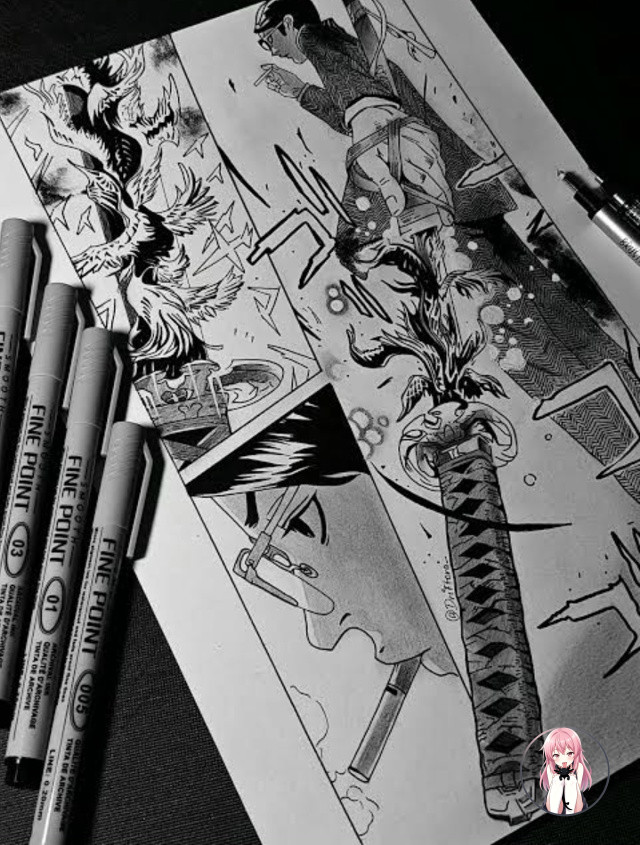
Black-and-White Aesthetic: With rare exceptions (color covers or first pages), manga is always published in black and white. This allows artists (mangaka) to release new chapters every week without wasting precious time on coloring. The focus shifts to working with lines, shadows, and screentones (textures).
“Living” Emotions and Special Effects: Every emotional state is conveyed through graphic symbols. A drop of sweat on the back of the head signifies embarrassment, bulging veins indicate rage, and blood from the nose represents extreme excitement or admiration for someone’s beauty. Sounds (explosions, footsteps, rustling wind) are drawn directly over the frame as part of the illustration.
Focus on Characters: Unlike Western comics, where the emphasis is often on action and saving the world, in manga, the main focus is on the inner world of the hero, their growth, weaknesses, and development of relationships with others.
Genres for All Ages
One of the main misconceptions is to think that manga is created only for children. In Japan, it is read by everyone: from first-graders to gray-haired businessmen on the subway. The market is clearly divided into demographic groups:
Shonen: Stories for teenage boys (ages 12 to 18). The plot revolves around friendship, rivalry, self-improvement, and endless training. The main character often starts as a weakling but becomes the strongest through perseverance. Examples: “Naruto,” “One Piece,” “Jujutsu Kaisen.”
Shojo: Manga for teenage girls. Here, romance, school life, deep emotional experiences, and first love take center stage. The artwork often features elegant lines and a wealth of colors in the background. Examples: “The President is a Maid!”, “Your Lie in April.”
Seinen: Works for adult men (ages 18 and older). The plots become dark, psychological, and raise complex ethical, philosophical, and political questions. There is a lot of realistic violence and drama. Examples: “Berserk,” “Vagabond,” “Monster.”
Josei: Realistic stories for adult women. The plots discuss work challenges, self-discovery, everyday problems, and adult romantic relationships without teenage naivety. Examples: “Nana,” “Nodame Cantabile.”
How Manga is Born: The Path to the Reader
The process of creating manga is grueling work. A manga creator (mangaka) usually works 14–16 hours a day.
First, the story is released in chapters (15–20 pages) in thick weekly or monthly magazines made of cheap newsprint (for example, the legendary Weekly Shonen Jump). If readers vote for the story with their wallets and surveys, the publisher collects the chapters under one cover and releases a tankōbon—a quality paperback (about 200 pages).
The pinnacle of success for any manga is receiving an anime adaptation, which significantly increases the sales of printed volumes.